





Have you ever looked at a photo of yourself and noticed you weren't smiling the way you used to? Maybe you kept your lips together because your teeth looked yellow or dull. Perhaps you've noticed your teeth wearing down, shifting, or developing gaps over time.
Sometimes it takes a special occasion, like a wedding, anniversary, or family gathering, to make you think about improving your smile. But when you really think about it, it's not just about looking good for one event. You want to feel comfortable and confident smiling every day.
Maybe you've considered whitening your teeth, straightening them, or repairing worn or damaged teeth. But where do you start? How do you know which treatments you actually need?
That's where understanding what goes into a smile makeover can help.
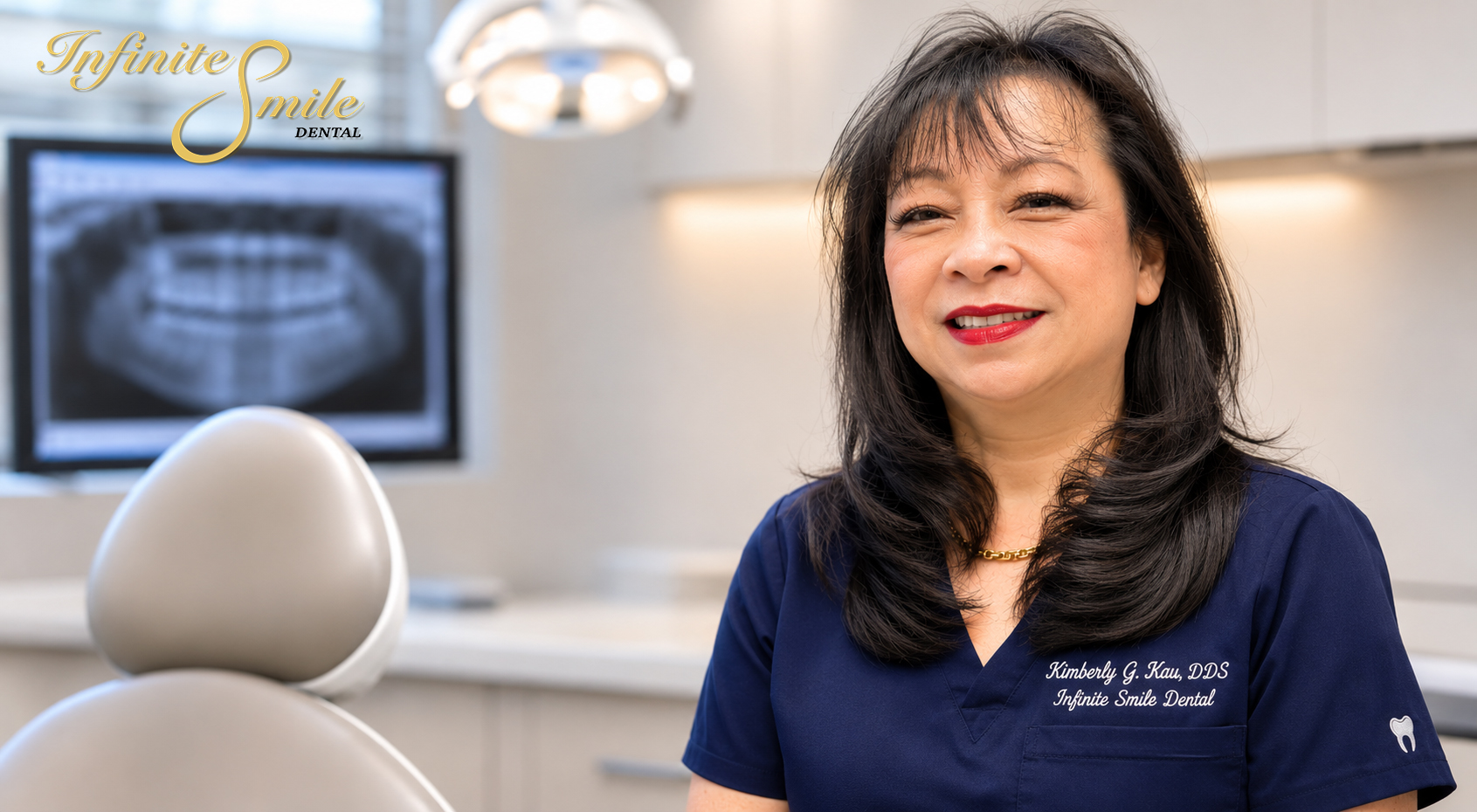
At Infinite Smile Dental in Pleasanton, serving the Tri-Valley–Dublin, Livermore, San Ramon, and Danville, I help patients understand their options so they can make informed decisions about their dental health.
Every Smile Has a Different Starting Point
No two patients have exactly the same teeth, dental history, or goals.
One person may have healthy teeth but want a brighter smile, while another may have teeth worn down from years of grinding. Someone else may have missing teeth, an uneven bite, or several dental concerns that need attention.
That's why I begin by understanding three things:
- The current condition of your teeth and gums
- Any functional or dental health concerns that need attention
- What you would personally like to improve about your smile
Some patients may need only one procedure. Others may benefit from a combination of treatments coordinated over time.
The goal isn't to perform any dentistry. It's to determine what dentistry is appropriate for you.
Understanding the Different Treatments
Depending on your needs, a smile makeover may involve one or more of the following treatments.
- Invisalign®: Clear aligners gradually straighten teeth and can help improve certain bite and alignment problems. In some cases, orthodontic treatment comes before restorative dentistry to establish better tooth positioning.
- Dental Crowns: Crowns cover and protect teeth that are significantly worn, weakened, or damaged. They can restore tooth shape, strength, function, and appearance.
- Porcelain Veneers: Thin porcelain restorations placed on the front surfaces of teeth can improve concerns involving shape, color, spacing, or minor imperfections.
- Professional Teeth Whitening: Treatments such as Zoom whitening can brighten natural teeth and help create a more consistent appearance alongside other dental restorations.
- Dental Bonding: Tooth-colored composite material can repair small chips, improve tooth contours, and sometimes reduce the appearance of gaps or black triangles between teeth.
- Dental Bridges: Bridges replace one or more missing teeth by using neighboring teeth or implants for support.
- Dental Implants: When a tooth cannot be saved or is already missing, an implant may provide a long-term replacement option that restores chewing function and supports a natural-looking smile.
Not everyone needs these treatments. I can help you choose the options that fit your dental condition and goals.
Sometimes the Journey Begins With Saving a Tooth
Before considering replacement, I first evaluate whether a damaged tooth can be preserved.
For example, a tooth with infected or damaged pulp may be treatable with root canal therapy, allowing the natural tooth to remain in place.
However, some teeth are too severely damaged to be predictably restored. In those situations, extraction may be necessary, followed by consideration of replacement options such as a dental implant or bridge.
Whenever possible, I make preserving your natural teeth my first priority.
Why Treatment Planning and Sequencing Matter
A comprehensive smile makeover may involve several stages rather than one appointment.
Consider someone whose teeth have worn down severely over many years.
The first step might involve Invisalign to improve alignment. Once the teeth are properly positioned, crowns could restore their shape and function.
If professional whitening is also part of the plan, I may recommend whitening natural teeth before placing the final crowns so their color can be matched appropriately. Crowns and veneers do not respond to whitening treatments.
If certain teeth cannot be saved, dental implants may become part of the overall treatment plan.
Each procedure serves a particular purpose, and the order of treatment depends on your individual needs. Some smile transformations may take several months or longer to complete, particularly when orthodontic treatment or dental implants are involved.
A Smile Makeover Is a Personal Decision
Improving your smile can be a significant commitment involving time, finances, and personal priorities. You may want to explore your options now but wait until later to begin treatment. You might prefer to address functional problems first and consider cosmetic improvements afterward.
Your treatment plan should reflect your dental health, desired results, available options, and personal circumstances. Before deciding, I want you to understand why a treatment is recommended, what alternatives exist, and what to expect so you can make an informed decision.
Your Smile, Your Timeline
Whether you're considering whitening, Invisalign, crowns, veneers, dental implants, or a more comprehensive smile reconstruction, the first step is understanding what's possible for your situation. You don't have to know which procedures you need before speaking with me. A comprehensive dental evaluation and treatment discussion are designed to help determine that.
At Infinite Smile Dental, Dr. Cassidy Kau and I are here to help you understand your options, answer your questions, and develop a treatment plan that reflects your dental health and personal goals. There's no single path to a healthier, more confident smile, and there's no need to rush your decision.
When you're ready to explore what's possible, I'm here to help.